Understanding the Gravity Forms Security Incident: Lessons in Supply Chain Security
The Gravity Forms supply chain incident highlights ongoing challenges in software development. Here's what happened and how to defend against supply chain attacks.
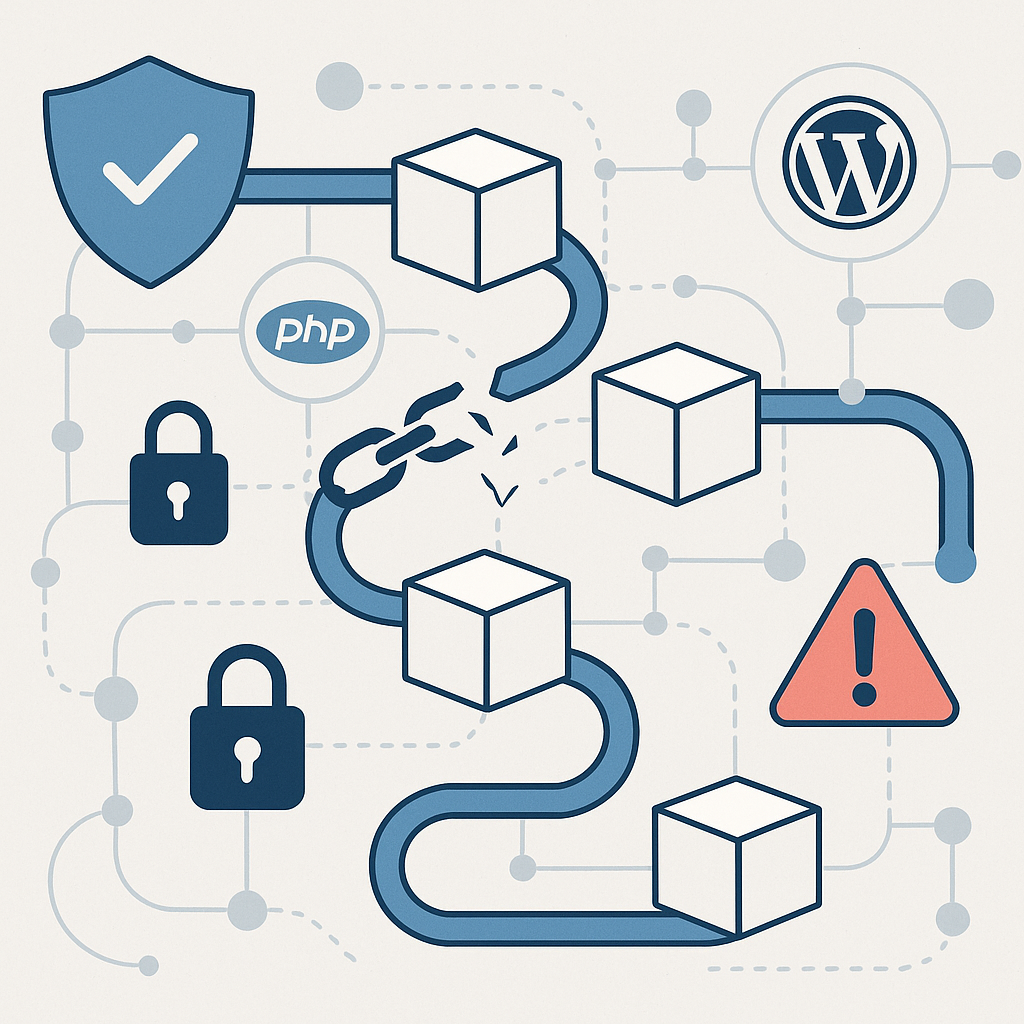
On July 10, 2025, a Gravity Forms security issue highlighted ongoing challenges in software development. This widely-used WordPress plugin experienced a supply chain incident affecting specific distribution channels over approximately 48 hours, offering insights applicable beyond WordPress to broader software development practices.
What Happened
Threat actors compromised specific Gravity Forms versions (2.9.11.1 and 2.9.12) distributed through manual downloads and Composer installations for approximately 48 hours. The sophisticated attack included carefully crafted payloads blocking legitimate updates, external command-and-control server communication channels, backdoor administrative account creation, and remote code execution capabilities.
The attackers specifically targeted manual download packages — often considered more secure due to additional oversight — demonstrating strategic understanding of enterprise deployment practices.
The Growing Focus on Supply Chain Security
Notable supply chain security incidents include SolarWinds (2020), which affected over 18,000 organizations including government agencies and Fortune 500 companies; Codecov (2021), which potentially exposed credentials for thousands of organizations; and the npm Event-Stream (2018) incident, where a popular package was hijacked to steal cryptocurrency wallet credentials.
Defending Against Supply Chain Attacks
Fruition implements defense strategies including automated scanning with Docker Hub scanning, GitHub Advanced Security, and continuous package monitoring. We use network monitoring with behavioral analysis detecting suspicious outbound communications. We employ controlled update processes with staging environment testing and automated rollback capabilities. And we maintain incident response planning with rapid detection, containment procedures, and clear communication channels.
Building Stronger Supply Chain Security
Leading organizations implement Software Bill of Materials (SBOM) tracking for detailed component inventories, automated security scanning at commit time and in production, vendor security assessments requiring detailed security documentation, supply chain-specific incident response plans, and a security-conscious culture encouraging questioning and verification rather than blind trust.
Conclusion
The Gravity Forms incident reinforces the importance of security strategies in interconnected digital ecosystems. Through strong security practices, organizations can manage supply chain risks while drawing on innovation from modern software development.
More from the blog
Want to discuss this topic?
Our team is available to talk about AI strategy, security, and the engineering behind it.