The April 24, 2026 ADA Compliance Deadline Is Here: What Government Agencies Need to Know About PDF Accessibility
The federal deadline for state and local government digital accessibility compliance is April 24, 2026. If your agency serves a population of 50,000 or more, the clock has run out, and PDFs are likely your biggest remaining risk.
What the DOJ’s Final Rule Actually Requires
In April 2024, the Department of Justice published final regulations that eliminate decades of ambiguity about digital accessibility for state and local governments. The rule establishes WCAG 2.1 Level AA as the mandatory technical standard for all government web content and mobile applications.
State and local governments serving populations of 50,000 or more must ensure their web content and mobile applications conform to WCAG 2.1 Level AA. This is not a suggestion or a best practice. It is a federal legal requirement published in the Federal Register on April 24, 2024, by the U.S. Department of Justice.
The two compliance deadlines are:
- April 24, 2026: entities serving populations of 50,000 or more, including large cities, counties, state agencies, public universities, school districts, and any other government body at or above that threshold.
- April 26, 2027: smaller entities serving populations under 50,000.
The consequences of non-compliance are real and potentially significant. The Department of Justice can initiate investigations and enforcement actions against state and local governments that fail to meet their ADA obligations. Non-compliance also risks federal penalties up to $150,000 per violation and private lawsuits.
Why PDFs Are the Hidden Compliance Risk
Most government IT teams have focused remediation efforts on their primary websites and web applications. That’s the right starting point, but it often leaves a massive blind spot: the PDF library.
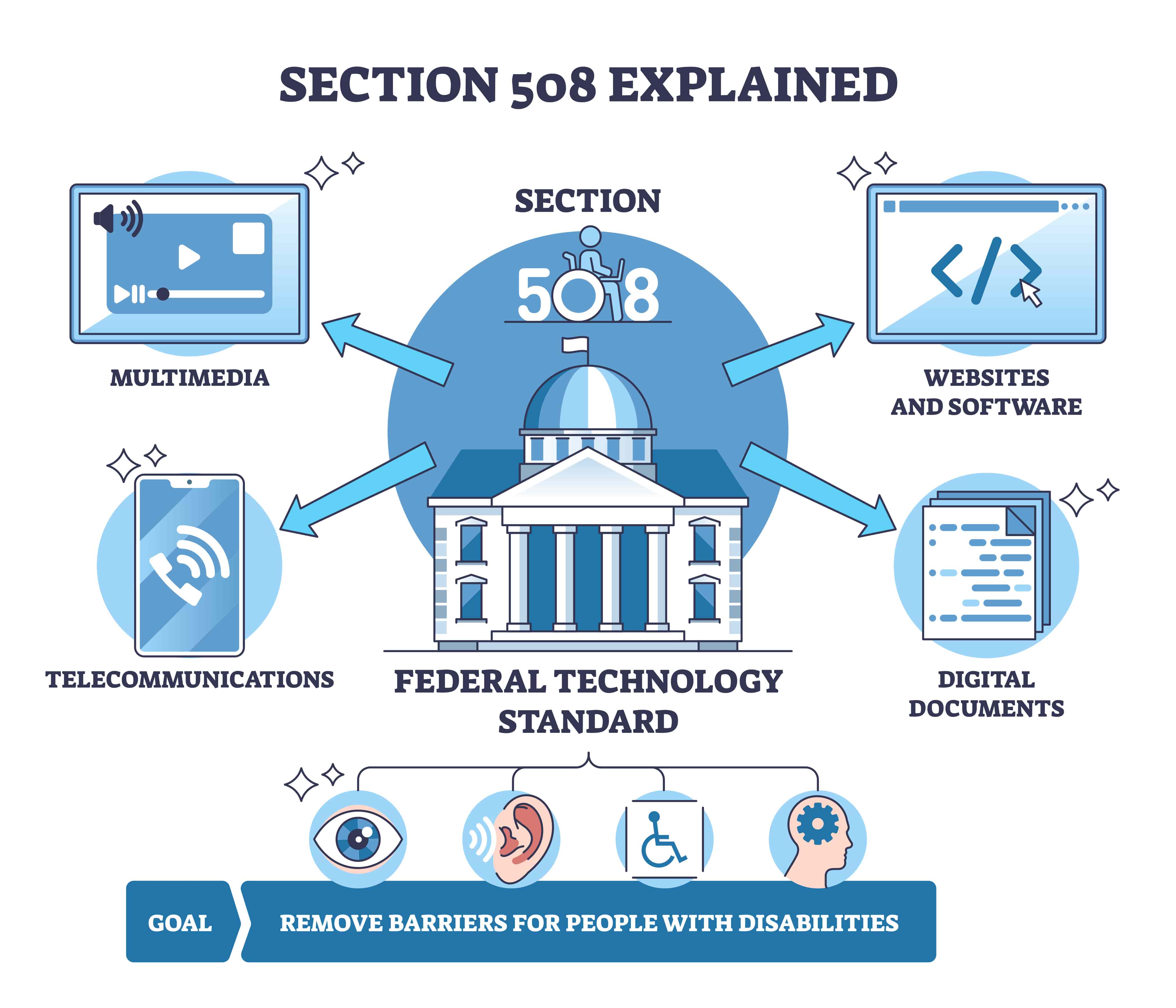
The rule applies to every digital touchpoint that delivers government programs, services, or activities. That includes primary websites, web-based applications, mobile apps, online forms, PDF documents, and even third-party content hosted on government platforms.
PDF documents must be tagged and structured for assistive technology. This applies to permit applications, public hearing notices, benefit enrollment forms, business license documents, and any other PDF that residents are actively using to access government services.
The exceptions in the DOJ’s rule are narrower than many agencies assume. Archived content (content created before the compliance date, not updated, and maintained in a clearly designated archive for reference purposes only) may qualify for an exception. So may pre-existing documents maintained on an agency’s website, such as agendas and meeting minutes. But if a document is in active public use, it must be remediated regardless of when it was created.
How Fruition’s PDF Accessibility Platform Helps
Fruition built its PDF remediation platform, available at ada.fru.io, specifically for the scale and budget realities of government organizations. The platform delivers remediation in two phases:
Phase 1, Structural Remediation handles the foundational fixes: setting PDF metadata, applying PDF/UA-1 identifiers, establishing correct tab order, creating complete structure trees, and generating bookmarks from document structure. This brings documents into baseline compliance quickly.
Phase 2, Full AI-Powered Remediation goes deeper. Using AI-driven image alt text generation and semantic content tagging, the platform analyzes content streams, identifies headings, paragraphs, lists, and tables, injects marked content tags, and performs color contrast analysis against WCAG luminance ratios. The result is a document that meets WCAG 2.2 AA standards, exceeding the current federal requirement and future-proofing your document library.
While WCAG 2.1 AA is the current federal requirement, adopting WCAG 2.2 can help future-proof your digital services.
The platform is accessible via REST API, making it straightforward to integrate into existing document management systems or content publishing pipelines, without requiring agencies to rebuild their workflows from scratch.
What Compliance Actually Looks Like in Practice
Meeting the federal standard requires a proactive approach involving audits, remediation, policy changes, and ongoing vigilance. The path requires commitment, but results in a more inclusive, equitable, and legally sound digital presence that truly serves all constituents.
For agencies working through large document libraries, the practical approach is prioritization. Start with the documents residents use most: permit applications, benefit enrollment forms, public hearing notices, and any form required to access or apply for government services. Then systematically work through the broader library.
ADA Title II compliance doesn’t end on the deadline date. The rule establishes ongoing obligations for maintaining accessibility standards, including regular monitoring, staff training, and a review process for newly published documents.
Beyond legal compliance, achieving digital accessibility is about fundamental equity. Inaccessible platforms deny equal access. But the benefits extend further: easier use for seniors, a better experience for all users, improved SEO, and enhanced public trust.
Get Started Before the Deadline
“Government agencies have spent years building public trust through transparent communication. An inaccessible PDF on a government website isn’t just a compliance risk. It’s a barrier between a resident and the services they’re entitled to. Our platform removes that barrier quickly and affordably, so agencies can focus on serving their communities.” Sallie Wright Serene, VP of Delivery at Fruition
State and local governments, special districts, and public agencies can assess their PDF compliance exposure and explore Fruition’s remediation platform at ada.fru.io or by contacting our team.
More from the blog


Want to discuss this topic?
Our team is available to talk about AI strategy, security, and the engineering behind it.